England, November 23, 2009 (Day 8)

Tori had school off on Monday so Joe and I took her into London for a day together. We initially were going to go to a fashion museum but, unfortunately, it was closed on Mondays. So, we thought a bit of shopping in Covent Garden and then Harrods might be a fun alternative. We took the train in from Hook and we had a good time!

Covent Garden is famous for its shops, street performers, bars, restaurants, theatres and the Royal Opera House. Tori needed to look for a dress for the play she is in so that was our main goal but, despite our efforts, we didn't find a dress.

On our way to Paperchase in Covent Garden, we came across the Piazza where Sky TV was filming a dance show. We stopped and watched for a bit and it reminded me of the T-Mobile dance commercials that are all the rage on YouTube (if you haven't seen one, go to YouTube and look for the Liverpool T-Mobile commercial - it's awesome!)


We passed Russell Street and took a picture because Tori's last name is Russell!

As we were walking around the Royal Opera House, we saw Miriam Margoyles, the actress who played Pomona Sprout, the Professor of Herbology and the Head of Hufflepuff House, in one of the Harry Potter movies. She was going to the British Theater Awards that were being held at the Opera House and she was super friendly. She stopped and posed for pictures and signed autographs for people.


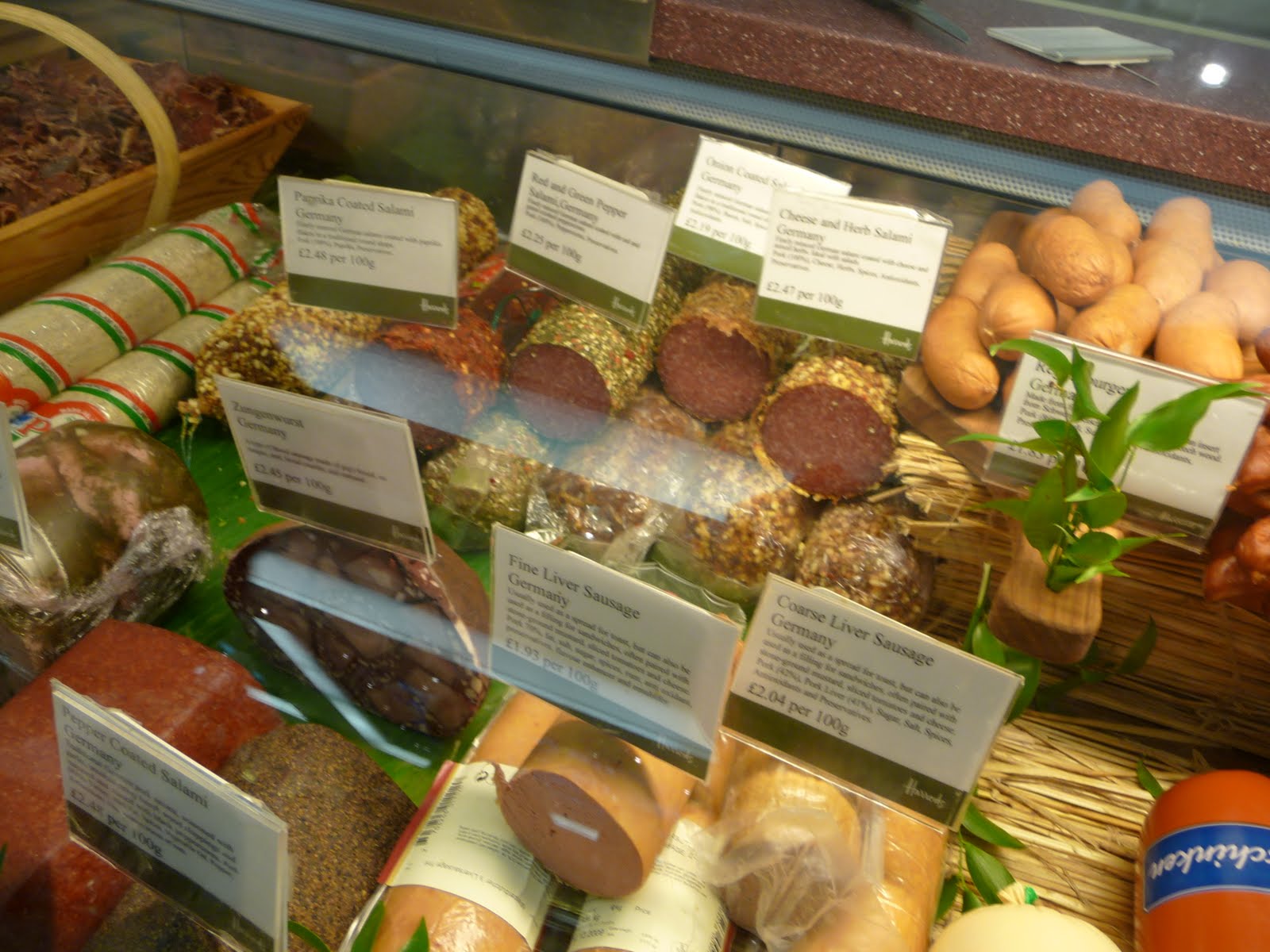
Harrods! Oh, what a place! Especially the Food Halls!


For a year and a half, Joe and I have been dreaming about the Parmesan Salami. We have looked everywhere for it and have not yet been successful finding it in Houston. The trip to London was worth it just for this salami! Oh, it is beyond delicious!!!!

On the bottom floor is a tribute to Princess Diana and Dodi al Fayed. The owner of Harrod's is Mohammed al Fayed, Dodi Al Fayed's father, and he has a quiet memorial to Princess Di and Dodi in one of the escalator lobbies.

After we got home, it was funny to see Lillia in her sweater and her rain boots, which she loves! She is totally adorable!!!

England, November 22, 2009 (Day 7)

We arrived safely in London and Nick, Tina and Lillia picked us up from the airport. Tori wasn't able to come because she was at play rehearsal. It was great to see everyone but especially fabulous to see our goddaughter, Lillia. Since April, she has developed so much! Lillia calls me "Aun Aman" and Joe "Unc Joe." It is so cute to watch how much she loves Joe!!

For dinner we went to Zizzi's Pizza in Farnham (a nearby town). For dinner, Tina and I split the Quattro Formaggi pizza (gorgonzola, grana padano, goat’s cheese, mozzarella and tomato + artichokes) and the Ravioli di Capra (Golden pasta envelopes of goat’s cheese and spinach with a fresh Santos tomato sauce and pesto). They were both quite tasty. Joe had the Pizza Sofia done Rustica style (spicy chicken, pepperoni, roasted sausage, tomato, mozzarella. Devilishly topped with green chilli and fresh rosemary on a bigger, thinner, crispier crust).


While at dinner, we got to witness one of Lillia's amazing tasks: she can get Tina's iPhone, turn it on, put in the password, scroll screens until she finds the game she wants, click on the game and then proceed to play the game where she spells words like "cat," "duck," and "fox." I can't believe at not even 2 years old she can do this all by herself! Smart girl!!

Oslo, Norway, November 21, 2009 (Day 6) - Opera House

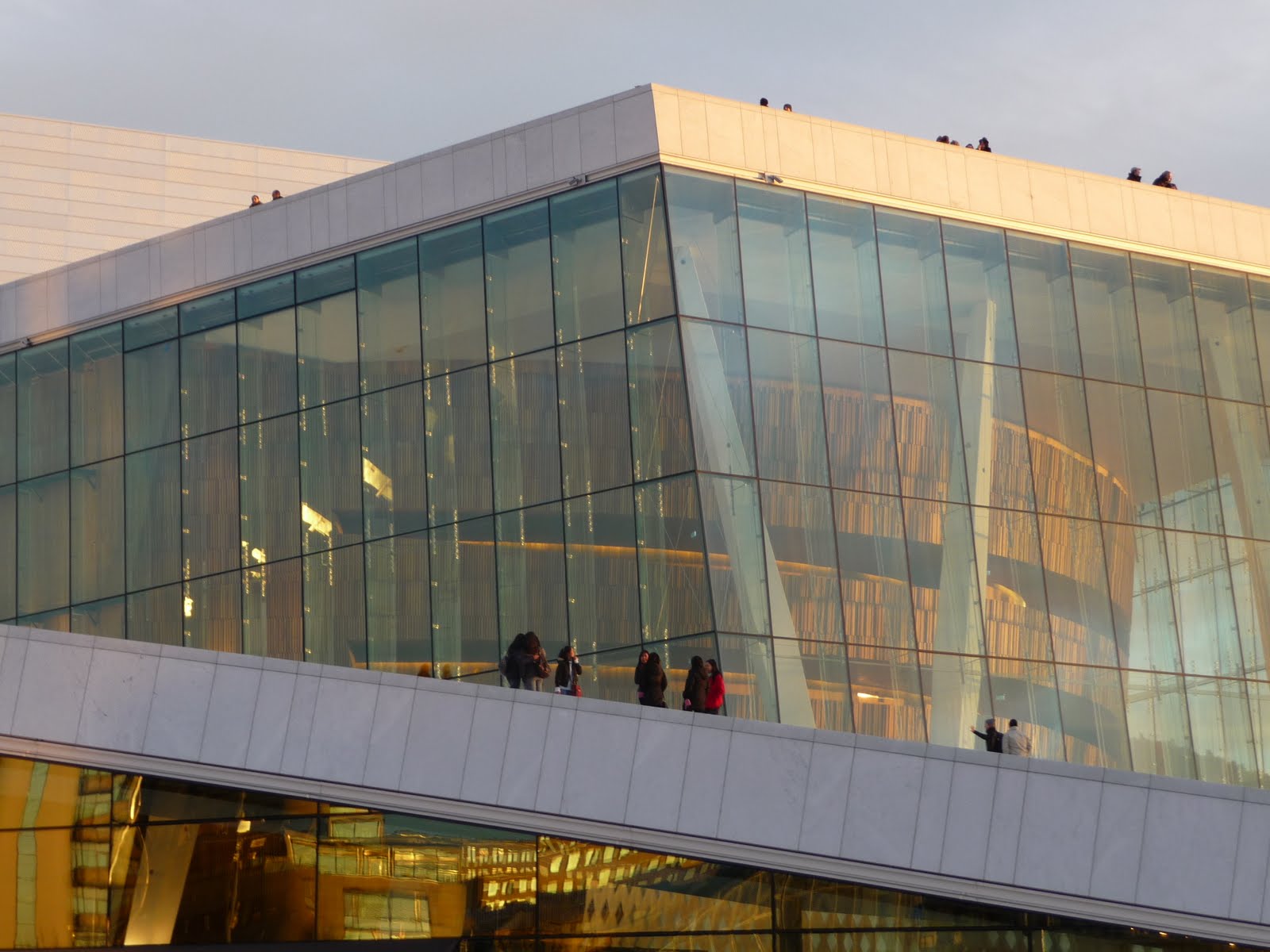
Oslo Opera House. For the Opera House three main materials were specified: White stone for the “carpet,” timber for the “Wave Wall,” and metal for the “Factory.” As work continued glass was introduced, allowing the underside of the “carpet” to be visible.


Walking roof at the Oslo Opera House. The marble clad roofscape forms a large public space in the landscape of the city and the fjord. The “Carpet” was a collaboration with artists Kristian Blystad, Kalle Grude and Jorunn Sannes. The architects chose the Italian marble, La Facciata, because it retains its brilliance and color even when wet. The surface treatment of the stone, its pattern, cuts and lifts, which create a shadow play, have been designed in close collaboration with the artists.


One enters the building under the lowest part of the roofscape where the ceiling meets the floor. Further into the foyer the roof is supported by four free standing volumes. The perforated, illuminated cladding of these volumes, by artist Olafur Eliasson, is inspired by glaciers and ice crystals.

View of the marble walkway from inside the Opera House


Oak was chosen as the dominating material for both the “Wave Wall’ and the main auditorium. For the “Wave Wall,” which has a complex organic geometry made up of joined cone shapes, it has a light and varied surface.


Oak, treated with ammonia to give a dark tone, was used in the auditorium for floors, walls, and ceilings, as well as balcony fronts, and acoustic reflectors. The main auditorium is a classic horseshoe shape designed for opera and ballet. It seats approximately 1,370 divided between stalls, parterre, and three balconies. The orchestra pit is highly flexible and can be adjusted in height and area with the use of three separate lifts.


The Snøhetta designed chandelier, suspended inside an oval reflector, is the main source of illumination in the auditorium. Made of 5,800 hand cast glass crystals, through which 800 LED lights shine, the chandelier gives off a cool diffused light.


The design of the metal cladding elements was a collaboration with Astrid Løvaas and Kirsten Wagle. Because the Opera House is designed to have a long life span the selection of the metal cladding was very important. Aluminum was selected because of aesthetics, longevity, malleability and the possibility of making very flat panels. The panels were punched with convex spherical segments and concave conical forms. The pattern developed by the artists was based on old weaving techniques. Eight different panels give a constantly changing effect depending on the angle, intensity and color of the light on them.


Ballet studio in the Oslo Opera House (the water is visible from the windows)


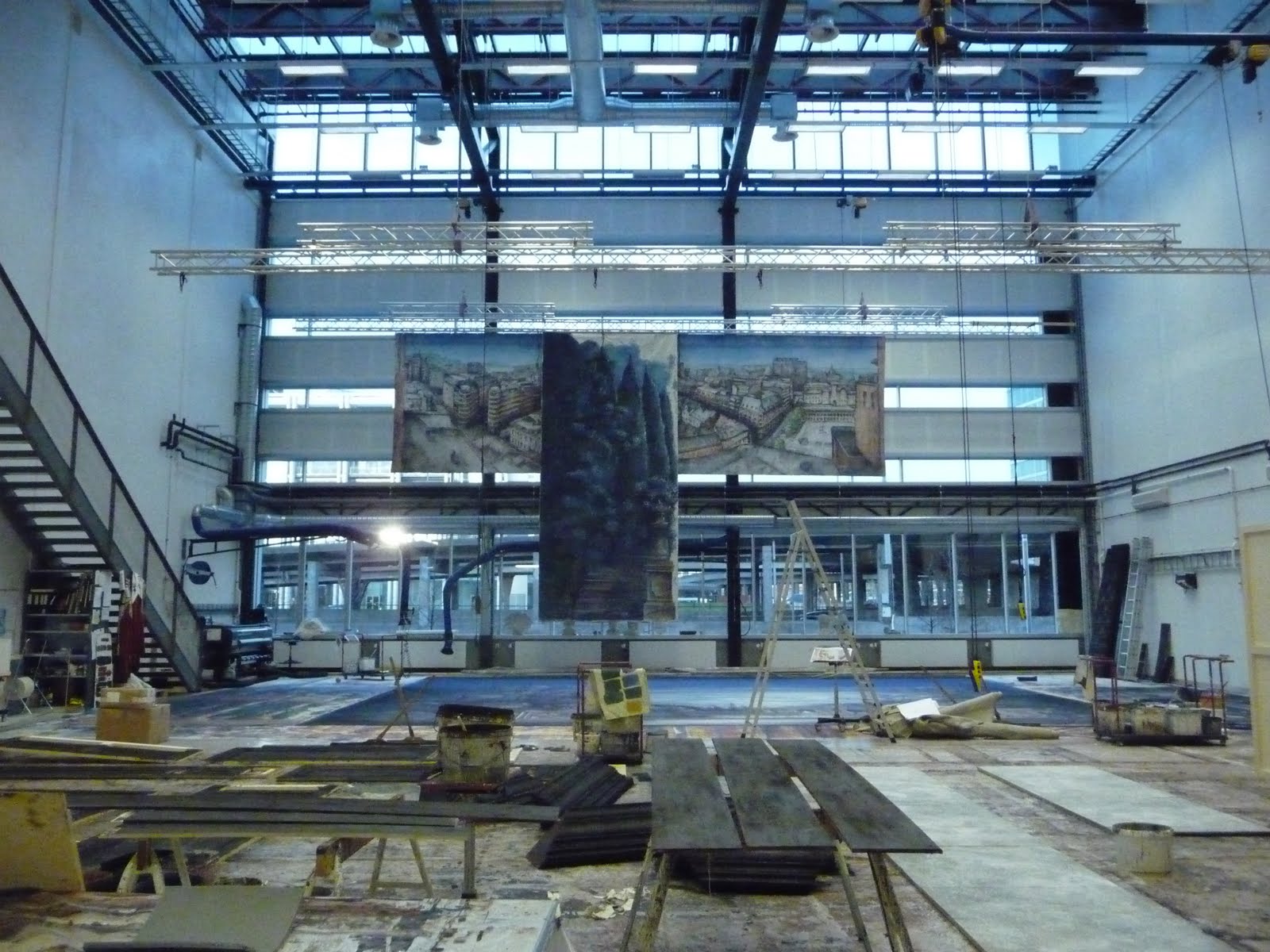
Painting studio at Oslo Opera House. They still mix all their pants by hand!


Joe standing outside the Oslo Opera House

Standing on the roof of the Oslo Opera House


Oslo, Norway, November 21, 2009 (Day 6)

Frognerseteren in Holmenkollen. Great day to see the view from the top!

Ampy, Sander, Amanda and Simon at Frognerseteren


Joe and Amanda at Frognerseteren

Frognerseteren

View of the fjords from Frognerseteren

Vigeland Sculpture Park is part of Frogner Park. There are 212 bronze and granite sculptures created by Gustav Vigeland. Shown here is the Wheel of Life, crafted in 1933-34. The wheel is more or less a wreath depicting four people and a baby floating in harmony. It is a symbol of eternity, and implies the overall theme of the park: man’s journey from the cradle to the grave.

The Monolith is composed of 121 human figures rising towards the sky. This is meant to represent man’s desire to become closer with the spiritual and divine. It portrays a feeling of togetherness as the human figures embrace one another as they are carried toward salvation.

The Monolith Plateau is a platform made of stairs that houses the Monolith totem itself. 36 figure groups reside on the elevation bringing with them the “circle of life” message. Man is depicted in a variety of typical human situations and relationships.

View of Frogner Park from the Monolith Plateau

Access to the Monolith Plateau is made via eight figural gates forged in wrought iron. The gates were designed between 1933 and 1937 and erected shortly after Vigeland died in 1943.

At the end of the 850-meter-long axis lies a sundial, forged in 1930

Oslo, Norway - November 20, 2009 (Day 5)

Today we enjoyed the Munch Museum where we saw another one of Munch's The Scream paintings as well as Madonna, Dance of Life, numerous self-portraits and many other fabulous works of art. My favorites though were paintings that I would not have initially even thought of as Munch paintings: his winter motifs and his winterscapes like Winter in Kragerø.

Winter, Kragero

The Scream

Dance of Life

Madonna

After the museum, Joe, Ampy and I went to Taste of China and had dim sum. The restaurant was in the "other" part of Oslo meaning the part of town that is more ethnically varied. The food was delicious and we really enjoyed lunch. After lunch, we went to the market to buy fresh vegetables and then the supermarket for other stuff.

Tonight we are going to relax, have homemade hamburgers, drink a little wine and hang about the house. What a lovely day!